
RESULTS
By the end of 2025, Mafisa services had reached 45,000 people across 45 communities. Animal health services reached nearly 80,000 cattle significantly reducing mortality and driving up household incomes. One hundred and fifty-nine boreholes have been drilled providing access to clean drinking water for people and cattle while also enabling vegetable gardens and alternative livelihoods such as field crops. Improved grazing practices across 450,000 hectares of land improved grassland health and productivity.
Impact
Mafisa undertook a substantial baseline survey in 2023, and is expecting to conduct a follow up in 2026, which will demonstrate changes in household income.
Meantime, progress towards improving productivity is monitored through cattle quality and output and access to clean water.
MORTALITY
At baseline, the overall mortality rate was 10.2% in the preceding 12 months. This was expected to improve to 7% within two years of project participation.
Despite the effects of serious drought, the overall mortality in the herds reported in July 2025 was 4.9% in the proceeding 12 months, 52% lower than baseline.
52%
reduction in mortality.
HERD GROWTH
Baseline, the herd sizes were growing by just one percent per year. An ambitious 15% increase was expected within two years.
In July 2025, herds were growing by 14%. Among herds of 20 animals and below, the growth rate was higher than expected at 20%.
20%
growth in herd size for farmers with 20 cattle or fewer.
CALVING
Calving is the percentage of reproductive females that carve within the proceeding 12 months. At baseline this was just 38.8%.
In July 2025, the calving rate had reached 50% for all herds, and 55% for herds of 20 cattle or fewer.
40%
more calves born for farmers with 20 cattle or fewer.
WATER
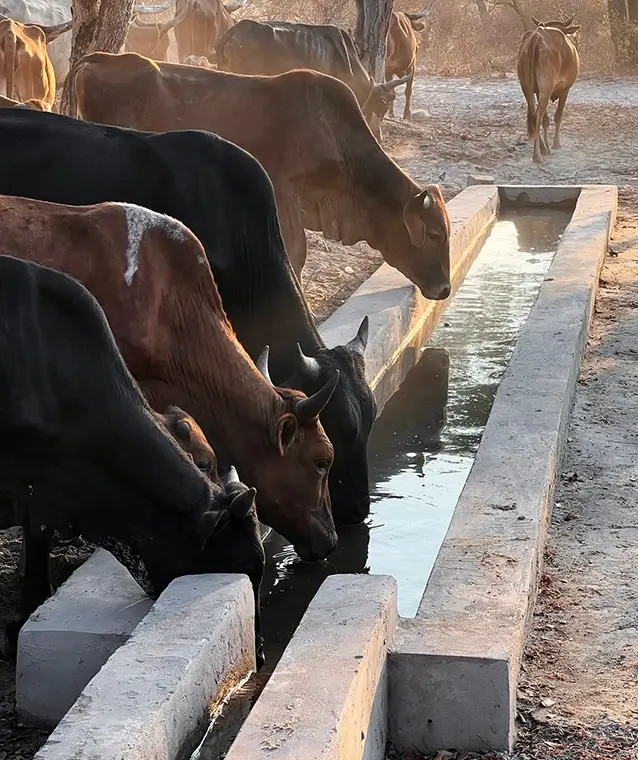
Families and cattle farmers struggle to access safe and reliable water sources and often have to walk long distances. By the end of 2025, 159 new boreholes provided clean and accessible water to 45 communities.
45,000
people and 80,000 cattle now have access to clean water.
Carbon monitoring
Carbon finance requires an extensive set of monitoring indicators.
Community monitoring tracks the quality of engagement with communities from inception, demonstrating full and willing participation of all interest groups, and showing how community feedback is incorporated into programme design.
Grazing monitoring follows compliance with grazing plans.
Extensive soil and biodiversity monitoring is conducted at baseline and followed up every five years.
EXPLORE
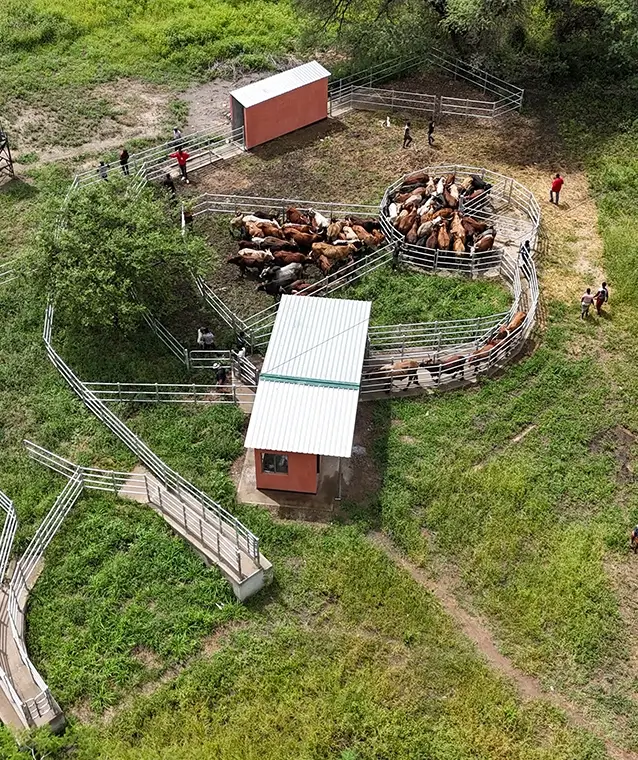
Our method
We focus on four areas: healthy cattle, good quality grassland, fair market access, and creating opportunity for all.
Finance
We identify financing pathways that enable our farming partners to become financially independent.
About us
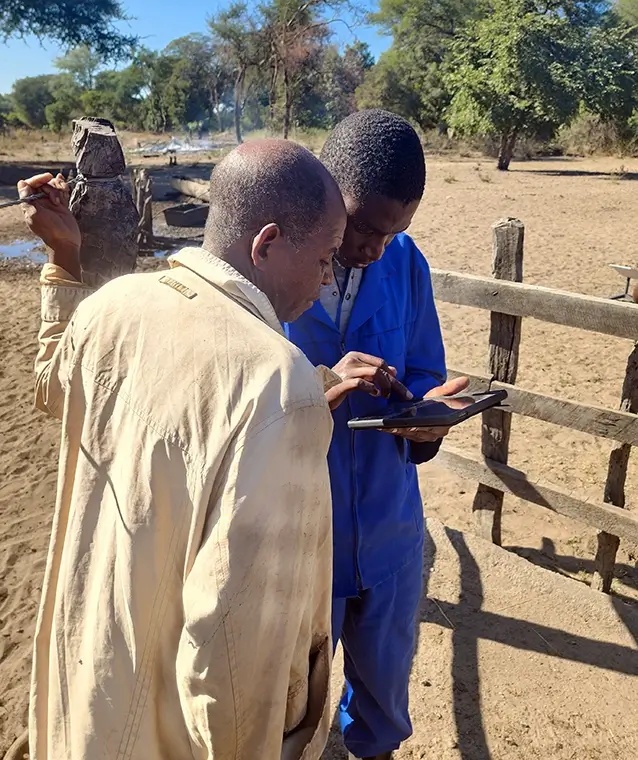
We use a competency based approach to recruitment so that we are building capacity within Zambia.
EXPLORE
Our method
We focus on four areas: healthy cattle, good quality grassland, fair market access, and creating opportunity for all.
Finance
We identify financing pathways that enable our farming partners to become financially independent.
About us
We use a competency based approach to recruitment so that we are building capacity within Zambia.
beyond zambia
Our joined-up approach has the potetial to work across Africa on a very large scale.